

.svg)
.png)
.png)
Everything’s Bigger in Texas: Key Energy Insights from CERAWeek 2025
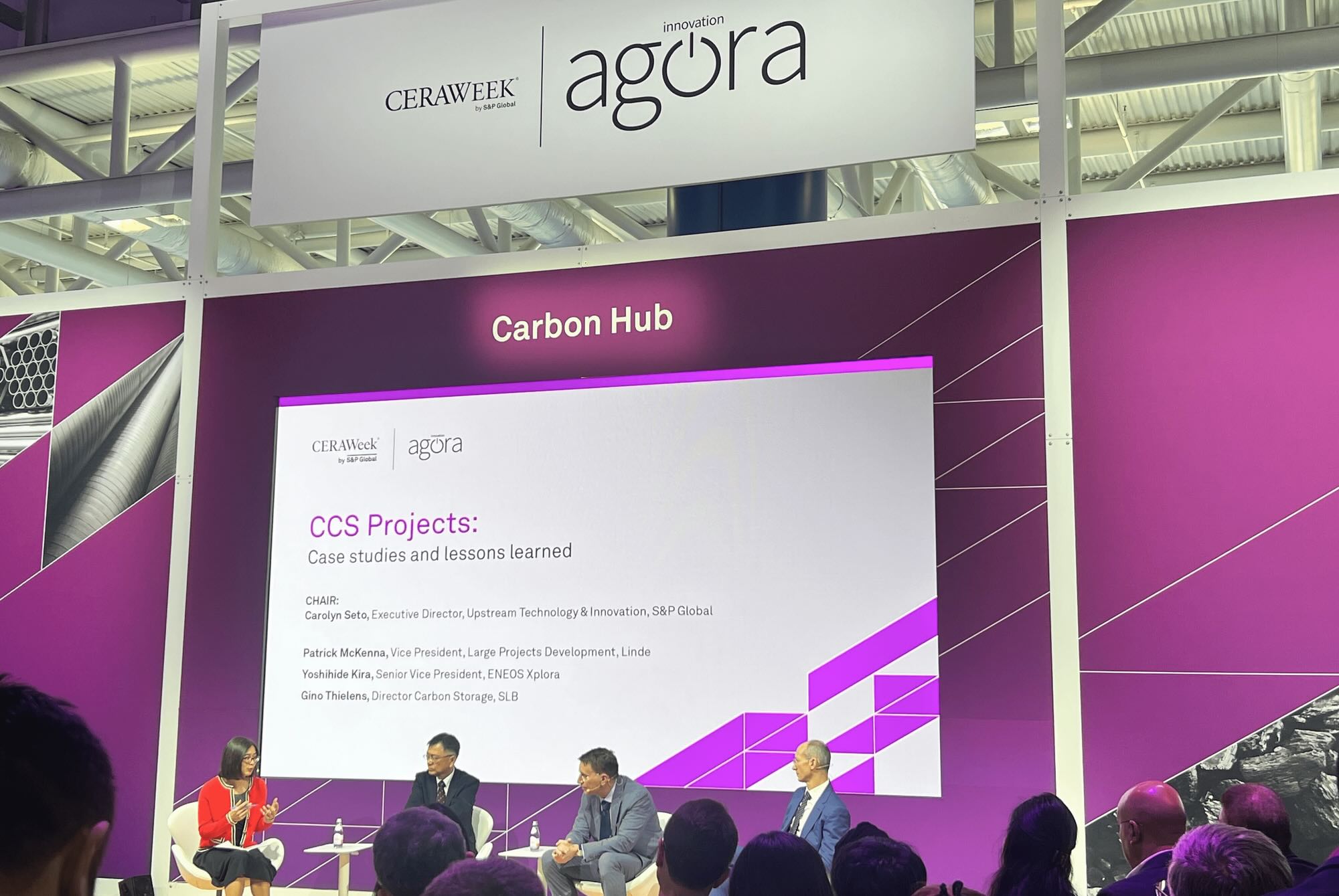
Every year, CERAWeek — known as the “Super Bowl of Energy” — serves as the ultimate gathering for the biggest names in the energy world. It's when policymakers, utilities, oil and gas execs, and financiers all huddle together to figure out where the energy game is headed. This year, the playbook is balancing AI's ever-growing thirst for power with a new focus on costs over climate, forcing a serious rethink of how to electrify the future. Power now is the name of the game, and was front of mind at last week’s conference.
The CTVC team was on the ground in Houston, and this year’s CERAWeek was markedly different from past years — in 2023, the Inflation Reduction Act was the talk of the town, while in 2024, AI dominated conversations. Now, in 2025, the focus is on how to actually get it all built — despite bottlenecks, financing gaps, and fractured supply chains.
The usual climate tech buzz was quieter, and a scaled-down DOE presence — aside from Secretary Chris Wright’s keynote — signaled a recalibration. On stage, Wright set the tone with a fiery speech slamming past policies and dismissing solar and wind in favor of gas, nuclear, and geothermal. “The previous administration’s cure was far more destructive than the disease,” he declared. (Full transcript here.) Off stage, industry leaders mostly agreed on an “all of the above” approach to power AI and meet demand spikes. TL;DR: The energy transition is happening, but managing friction is the real challenge.
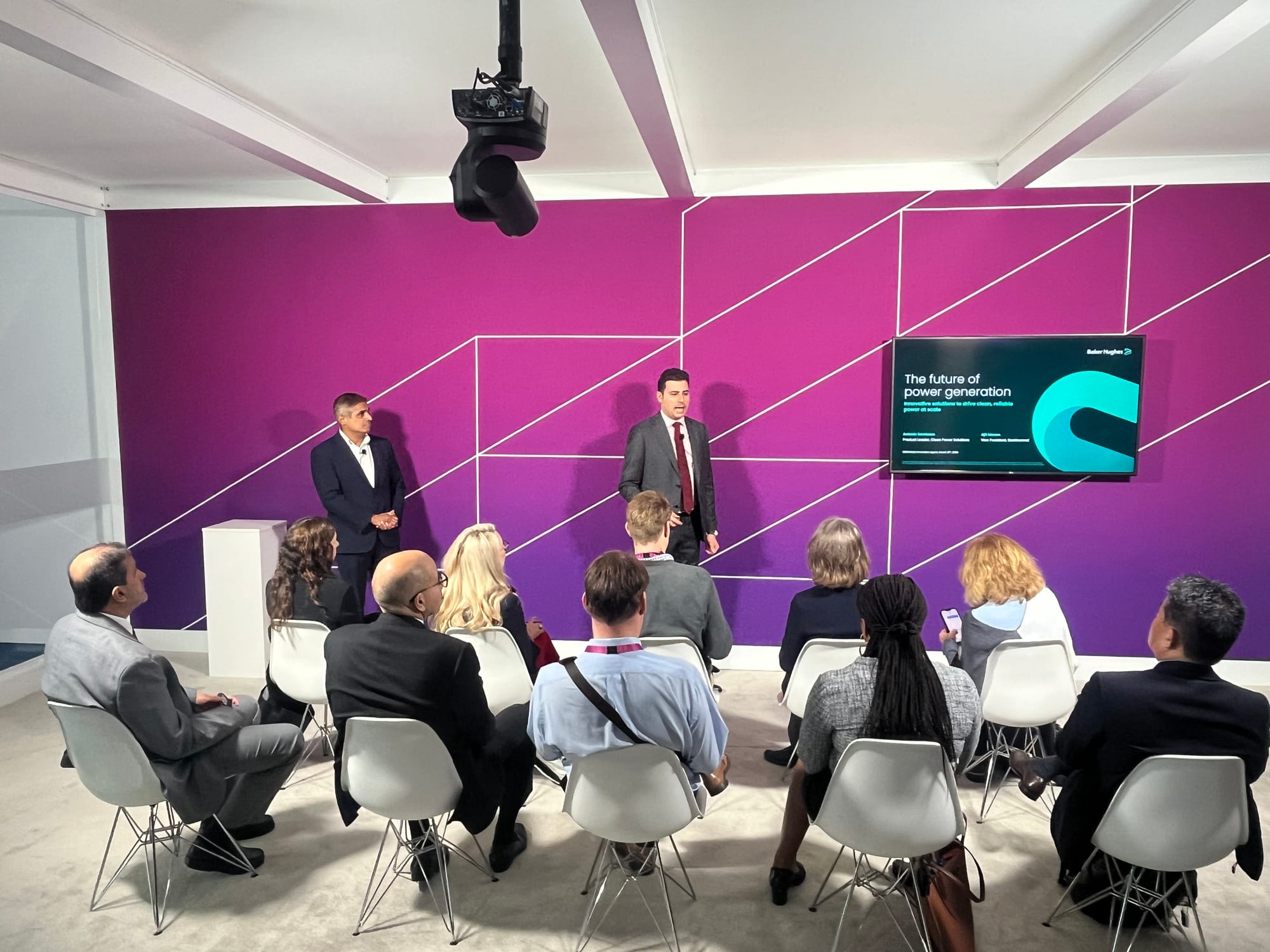
CERAWeek '25 at a Glance
- Big crowds: 10,000+ attendees, up from 8,000 in 2023 and 5,000 in 2022
- Big names: A who’s who of oil, gas, finance, tech, government, and innovation:
- Oil & Gas: Chevron, Aramco, Exxon, Shell, TotalEnergies, Occidental, bp
- Finance & Trading: BlackRock, Carlyle, Lazard, Mercuria, Trafigura, Glencore
- Government & Policy: US Secretaries of Energy and Interior, EU and UK energy leaders, policymakers from Canada and the UAE
- Tech: Microsoft, Google
- Power: Southern Company, National Grid, NextEra
- Equipment suppliers: GE Vernova, Mitsubishi, Turboden
- Hot topics: AI, nuclear, fusion, geothermal, carbon management, and grid digitization
Top 5 takeaways
1. Power ASAP (like, yesterday)
The power crunch is here. Even with varying demand forecasts, there was broad consensus that it's all-hands-on-deck to keep up. Gas and CCS emerged as stopgap solutions, with strong support for 45Q tax credits. However, a shortage of gas turbines and skyrocketing costs — up threefold in just a few years — are creating challenges for new builds. As Wright said, “drill, baby, drill also requires, build, baby, build.”
💬 Quotes: “Demand is here now. We need generation available to meet that demand, or we’re heading for an affordability crisis.” — John Ketchum, President & CEO, NextEra
“You don’t hear green premium anymore. You just hear that we need a lot of energy.” – Carlos Araque, Co-Founder and CEO, Quaise Energy
💥 So what? The industry is looking to expand what it can deploy quickly — gas, geothermal, renewables, CCS and potentially nuclear — without sacrificing reliability or affordability.
2. The AI energy squeeze: demand growth outpacing supply
AI’s energy demands are growing faster than grid planners could have ever anticipated. With hyperscalers like Google pushing AI to the forefront — the tech giant plans to spend $75bn on AI in 2025 alone — data centers are rapidly becoming the grid’s biggest source of new demand in decades. Energy companies, such as NextEra, Chevron, and Constellation, are collaborating with hyperscalers to co-locate data centers with power generation to ensure AI’s boom doesn’t break the grid.
💥 So what? The race for AI is rapidly becoming the race for power — and hyperscalers are ready to get creative in order to get power fast and first..
3. Nuclear: Back to the future
Nuclear is making a serious comeback. A cross-sector pledge — including Google, Amazon, and 31 countries — aims to triple global nuclear capacity by 2050. SMRs are still in development, but the first units are expected by 2029. Meanwhile, the US is doubling down on nuclear and geothermal to compete with China’s dominance in solar, batteries, and EVs.
💬 Quotes: “Oil is OPEX, nuclear is CAPEX.” — Jeff Currie, Chief Strategy Officer of Energy Pathways, Carlyle
"We've got to drive hard to accelerate fusion, otherwise China will." — Glenn Youngkin, Governor of Virginia
💥 So what? Nuclear power can play a significant role in the long-term, as it’s a top priority for industry and the US government, but it won’t solve short-term supply constraints.
4. The line between molecules and electrons is getting (even) blurrier
The divide between molecules (natural gas) and electrons (renewable electricity) is fading. CERAWeek is now as much a power conference as it is an oil and gas gathering, with AI and data centers dominating discussions. The focus has shifted to unlocking capacity through grid optimization and flexible solutions, including behind-the-meter. Microgrids, small gas turbines, and waste heat recovery are all being explored as creative ways to meet needs faster.
💬 Quotes: “It’s a joule pool. The color line has been erased.” — Jeff Currie, Chief Strategy Officer of Energy Pathways, Carlyle
“A lot of GWs are going to come from flexibility, as it can be done faster than new build.” - Caroline Golin, Global Head of Market Development & Innovation, Google
💥 So what? The energy sector is moving toward a more flexible, demand-driven model where timing and delivery matter just as much as fuel source.
5. Policy uncertainty and recession fears
Stock market volatility and recession fears cast a shadow over the crowd. Policy uncertainty, particularly around the IRA, also fueled concerns, with industry leaders calling for a more measured approach to policy implementation. In fact, 21 Republicans sent a letter to the House Ways and Means Committee last week, supporting IRA tax credits, essentially saying, let’s use a scalpel and not a hatchet.
💥 So what? The energy industry is pressing forward but treading cautiously. Economic and policy turbulence complicates long-term planning, there could be a chilling impact on project investment.


.jpg)

.jpg)
.png)
.png)
.png)


