

.svg)
.png)
.png)
Lithium-ion tops Sightline Climate’s newly released LDES Leaderboards
Emerging energy technologies are moving from innovation to execution. For utilities, banks, and investors, that shift brings familiar challenges: uncertain markets, competing technology claims, fragmented data, and high-stakes decisions with real consequences for ratepayers and balance sheets.
What’s missing is a transparent, objective way to understand which companies are truly ready to deliver — and how the competition stacks up.
Leading utilities and investors already rely on Sightline Climate analysis and tools to build their procurement, planning, and investment strategies. Now, as deployment accelerates, we’re introducing a new research product to help them know who to work with to achieve their goals: Sightline Climate Leaderboards.
Introducing: Sightline Climate Leaderboards
Sightline Climate Leaderboards are decision-grade rankings of companies supplying critical technologies and solutions to the fast-moving power and industrial sectors.
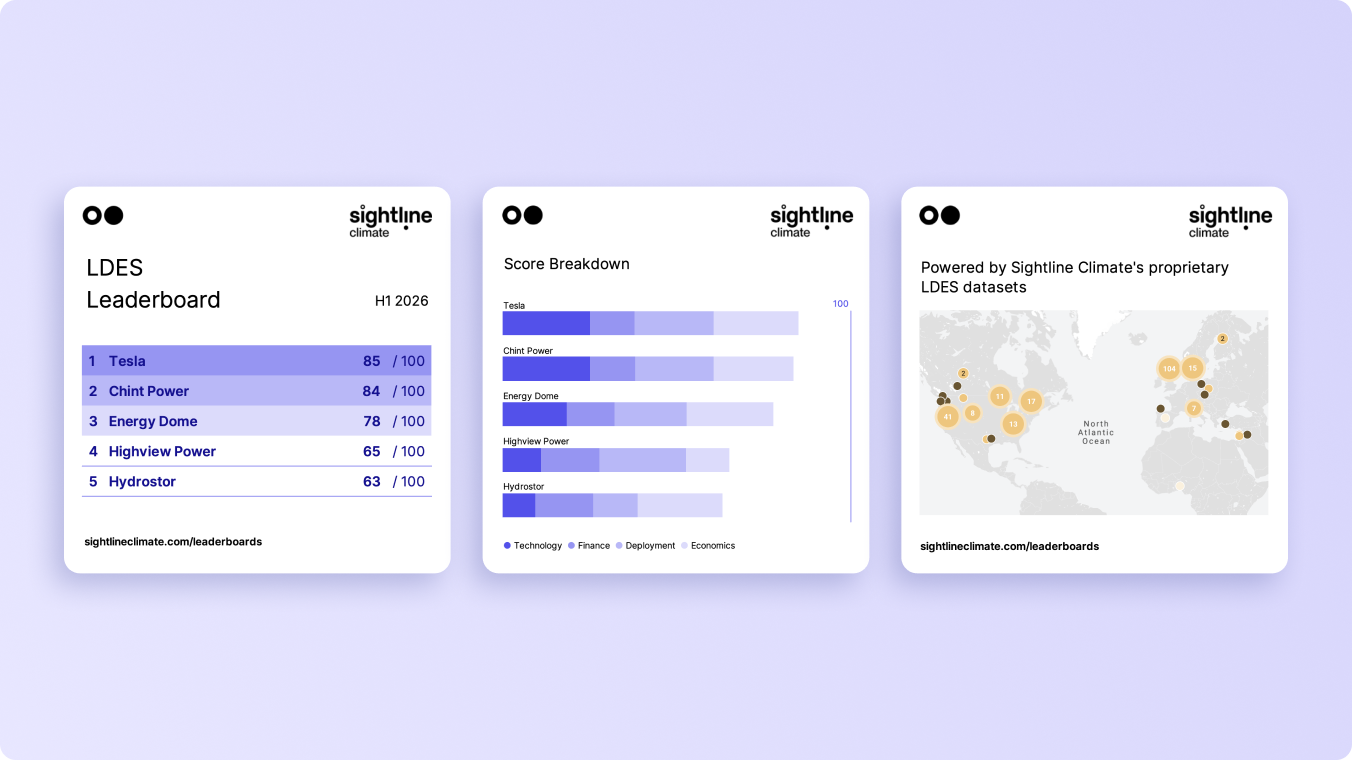
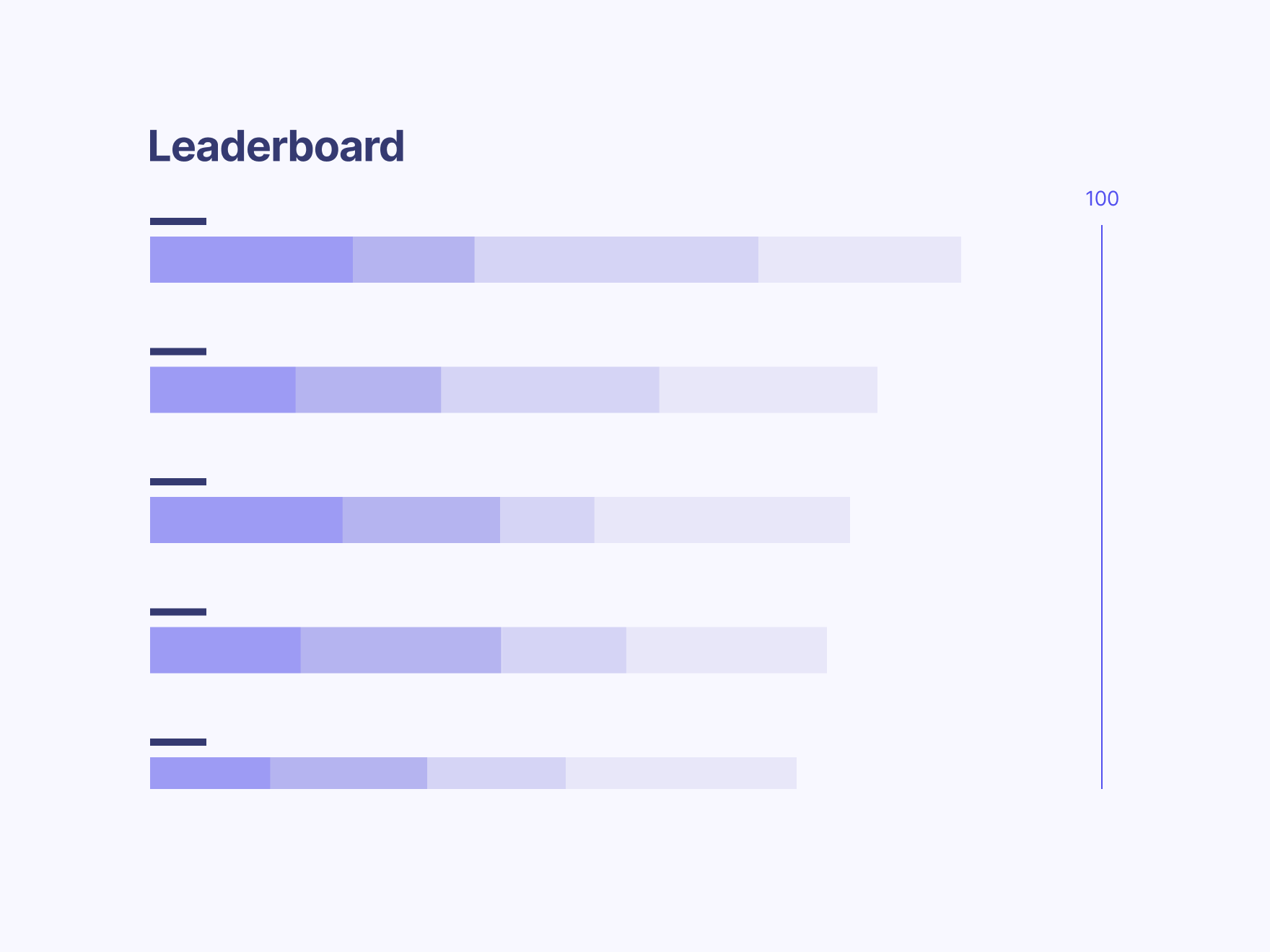
Rather than high-level technology comparisons, Leaderboards provide granular, vendor-level benchmarks built on verifiable and proprietary data. They offer an unbiased snapshot of relative competitive position — who is pulling ahead, who is stalling, and critically, why.
Sightline’s proprietary AI engine and expert analyst team ensure Leaderboards are updated regularly, to reveal new deployments, capital flows, and performance shifts that move the market.
Leaderboards are designed to be used, not just viewed. Built on Sightline Climate’s Sector Readiness Framework and fully integrated into the Sightline platform, every ranking is traceable to the underlying data and analysis. This allows users to validate assumptions, stress-test decisions, and track how competitive positions evolve. Sightline clients can access the full dataset underpinning each leaderboard — see it on the platform here.
Each company is evaluated across key dimensions based on how utilities, banks, and investors assess readiness:
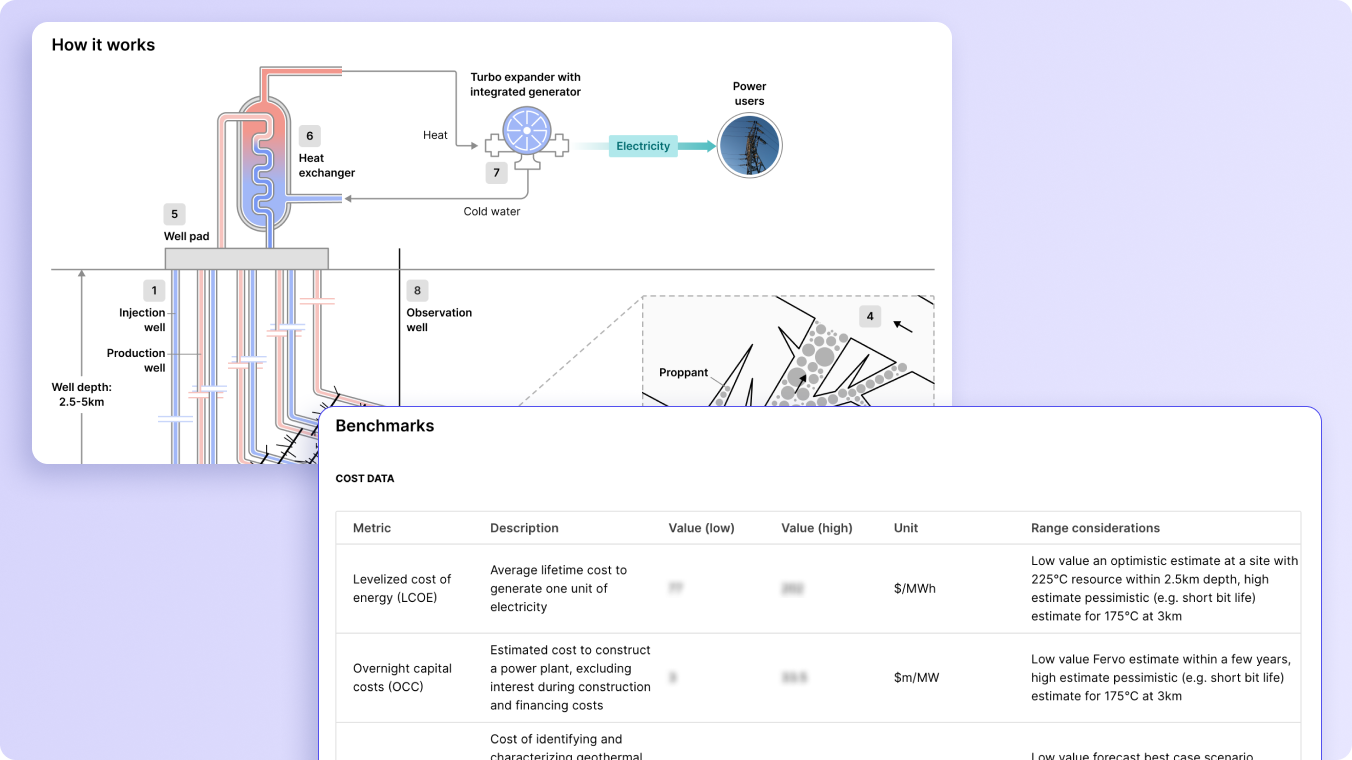
1. Technology performance: Prove that the technology works (or doesn’t). Drill into Sightline Climate’s Technology Profiles to assess performance benchmarks, past deployments and mistakes, and Sightline’s rating of how ready-for-primetime the technology is.
2. Financial profile: Stay on the safe side with a well-capitalized partner. Use Sightline Climate’s financial analysis tools to assess financing momentum and bankability.
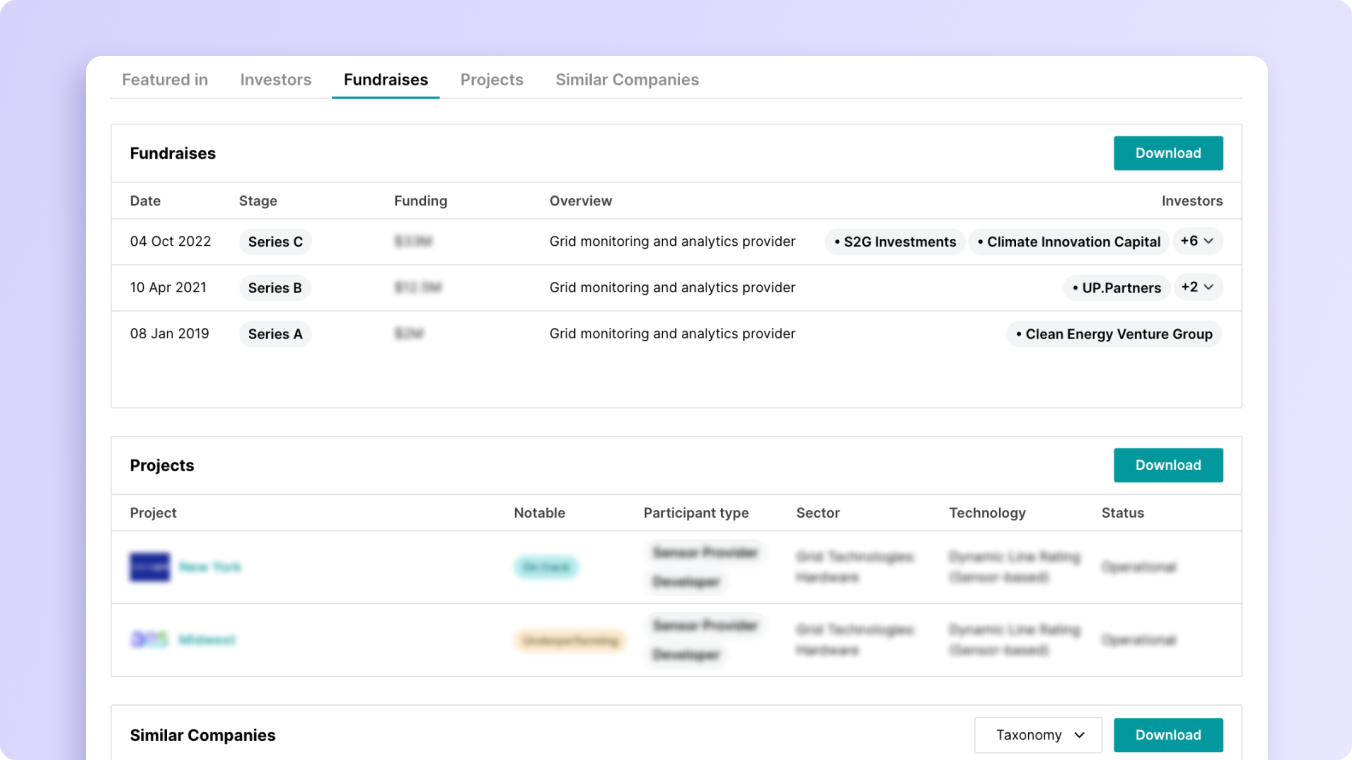
3. Deployment track record: Partnership risk lives in execution. Go from rankings to project-level deployment data by using Sightline Climate’s Project Analytics tool to verify who has or is selling into real projects and contracts, and who is just talking.
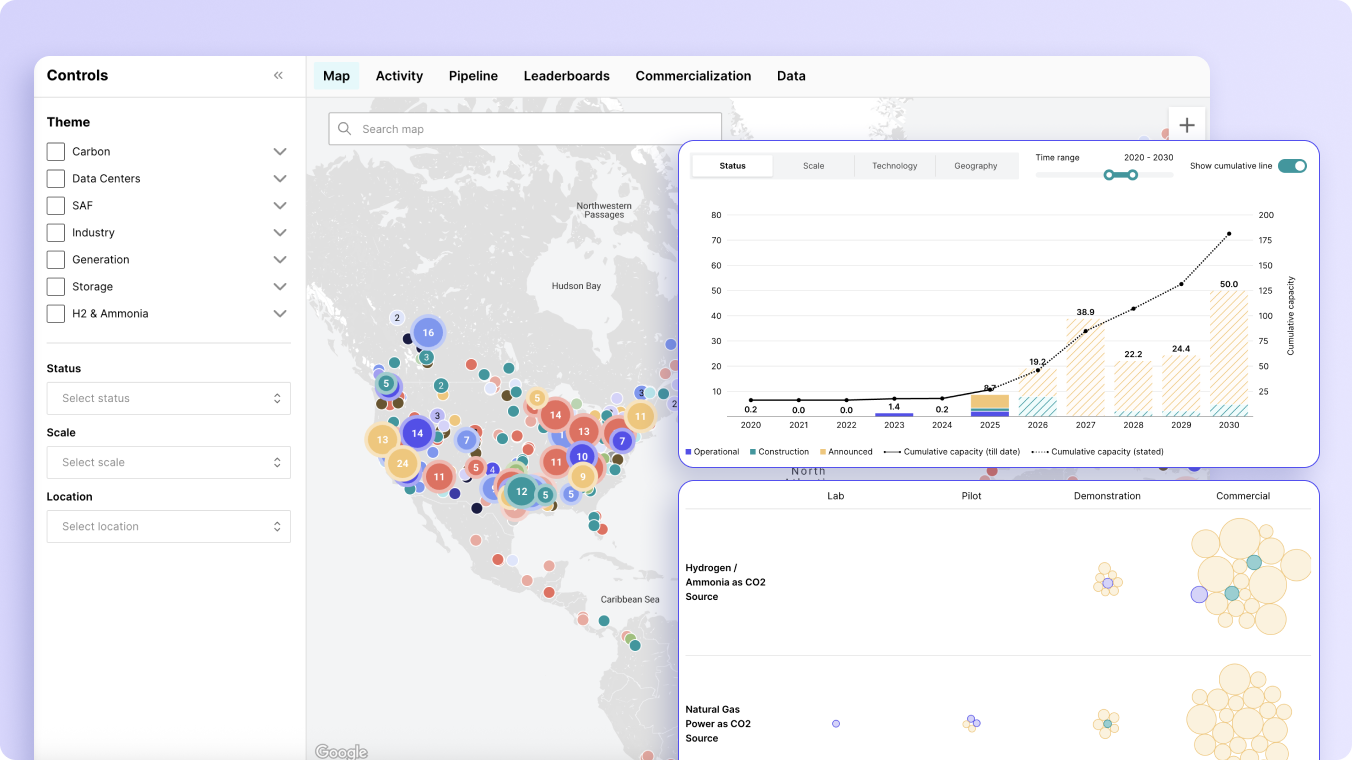
4. Economics and cost: If the economics don’t pencil, even the best-funded or slickest technologies will not work. Use Sightline Climate economic benchmarks to compare costs at both the technology and company level, against peers and against competing solutions.
The result is a leaderboard you can interrogate in real time, revealing who leads today, why they lead, and which underlying characteristics make one partner the right fit for your strategy.
The first Leaderboard: Long Duration Energy Storage (LDES)
Our first Leaderboard focuses on long duration energy storage, a sector moving quickly from pilots to system-critical infrastructure.
Rising electricity demand, increasing price volatility, and more frequent extreme weather are pushing utilities to invest in technologies that can firm renewables, defer transmission upgrades, and improve grid resilience. Sightline Climate expects LDES capacity to grow from near-zero today to roughly 10GW by 2030, as policy accelerates deployment.
That growth will not be evenly distributed. While Sightline tracks more than 250 LDES vendors globally, policy and procurement timelines mean only a small subset will scale meaningfully. In the next five months alone, global utilities are expected to announce up to 9.3GW of LDES tenders.
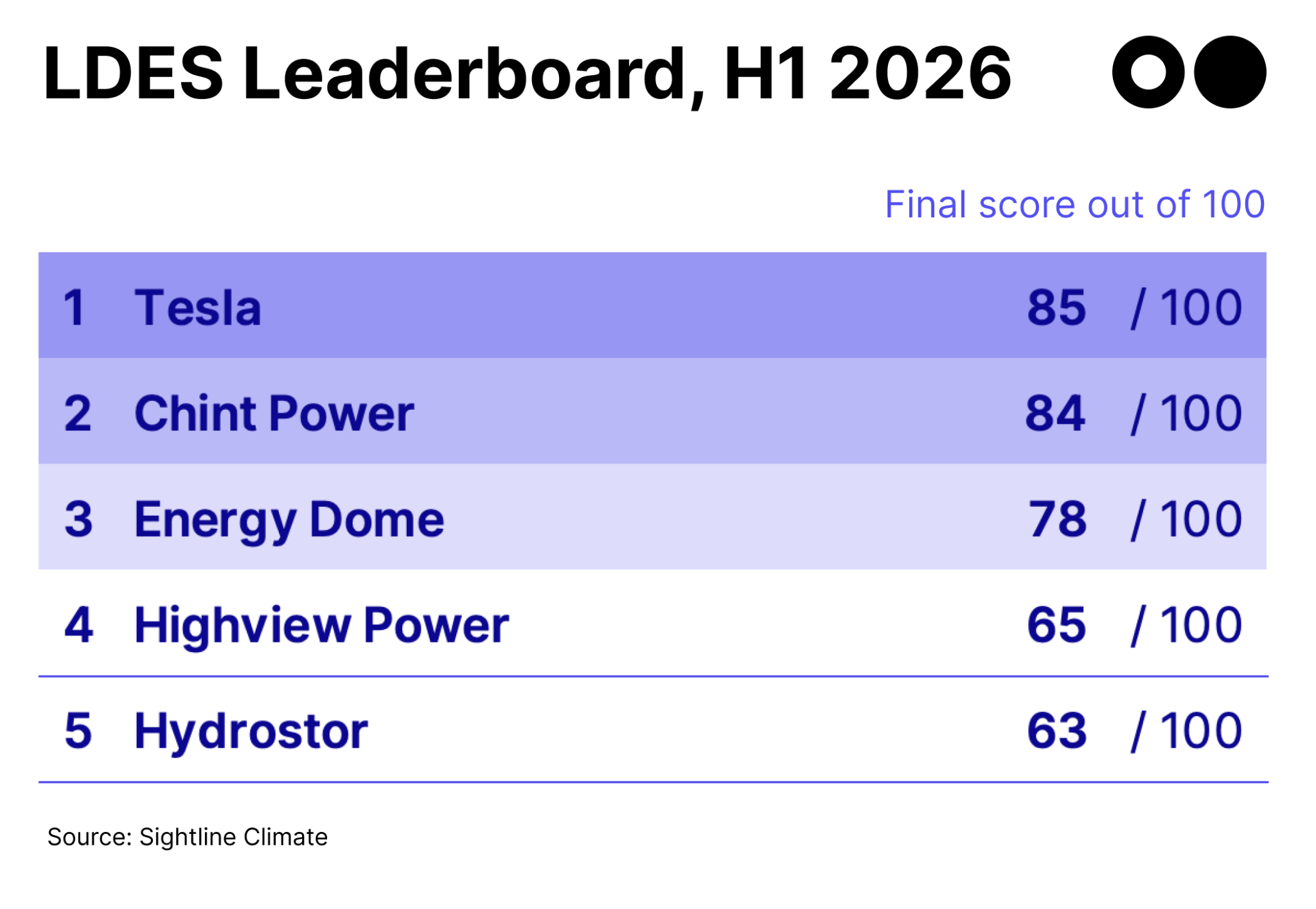
What the LDES Leaderboard shows: Lithium-ion remains the technology to beat
The inaugural LDES Leaderboard shows that lithium-ion remains the benchmark for long-duration applications today.
Lithium-ion vendors including Tesla and Chint Power continue to lead based on a combination of proven deployment at scale, strong round-trip efficiency, and competitive normalized economics at longer durations. These advantages are visible directly in the underlying deployment, cost, and performance data that inform the rankings.
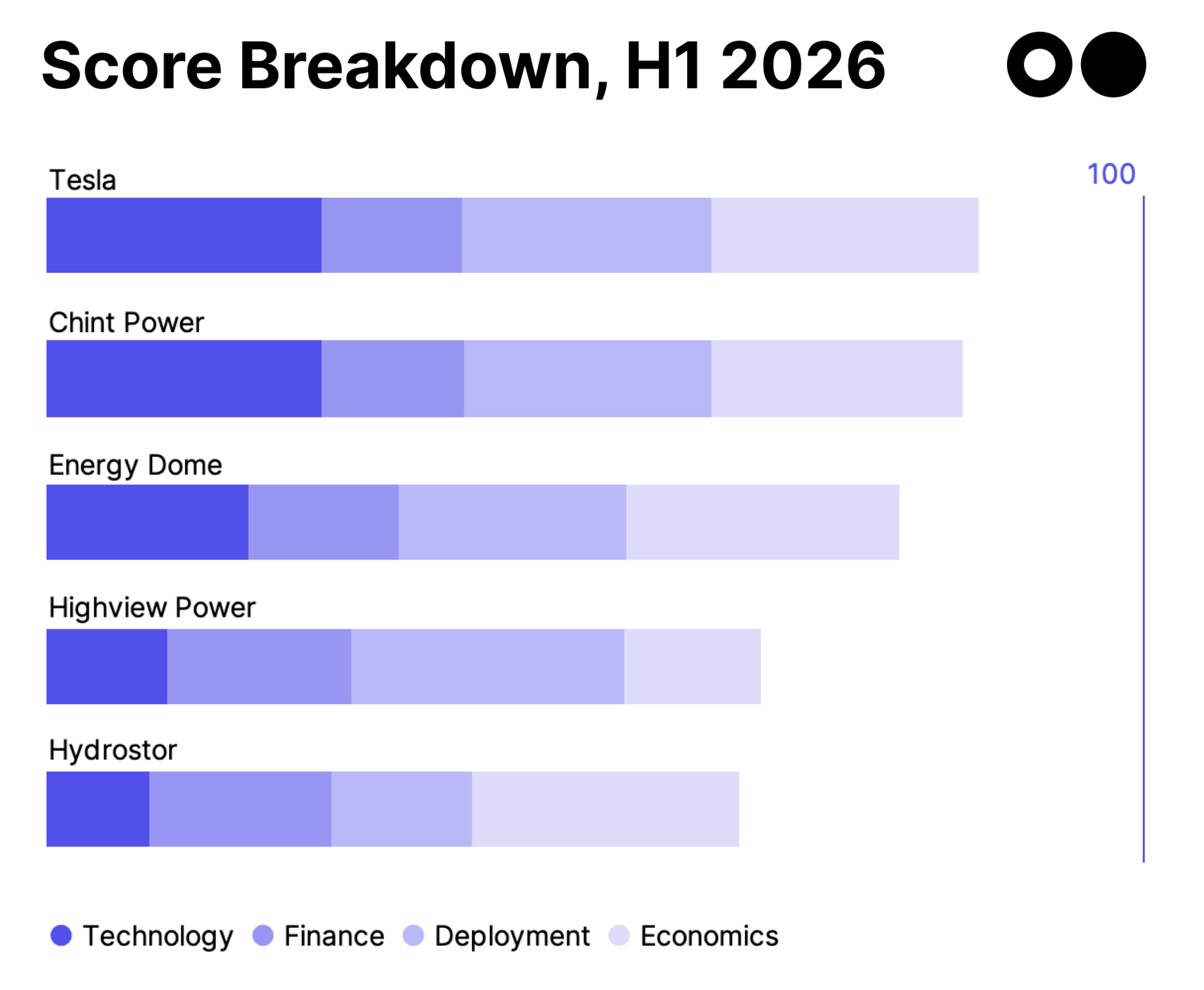
Among non-lithium alternatives, mechanical storage vendors are the most competitive today because they sidestep the capital intensity and long timelines of establishing new supply chains. Some electrochemical and thermal storage vendors show potential and could climb the leaderboard if they are selected by upcoming tenders in the UK, Australia, and Canada.
“A handful of non-lithium LDES vendors could have GWs of projects with long-term offtake contracts within the next five months,” said Lukas Karapin-Springorum, research associate at Sightline Climate. “But until now, it has been difficult to understand which vendors, if any, have the deployment track records and sufficiently low capex to compete.”
Who uses LDES Leaderboards
The LDES and additional Sightline Climate Leaderboards coming soon are designed to enable defensible procurement, partnership, and investment decisions.
Utilities and independent power producers
Utilities and IPPs rely on consistent, market-based benchmarks to justify large, long-dated procurement decisions. Leaderboards provide a defensible way to evaluate deployment track record and economic viability at the scale utility projects require.
Infrastructure investors and banks
Capital allocation depends on repeatability, not FOAKs alone. Leaderboards concentrate diligence on vendors showing portfolio-scale readiness and the signals of bankability required for repeated FID.
Suppliers and manufacturers
Equipment suppliers use Leaderboards to benchmark themselves across peers and track commercial traction across the market. Understand how vendors stack up and which platforms are emerging as credible competition, acquisition, or partnership targets.
Early-stage investors and new market entrants
VCs and new entrants face an increasingly crowded field with limited visibility into what truly differentiates winners. Leaderboards establish the performance frontier, showing which benchmarks define credibility and where differentiation is still achievable.
Methodology overview
The LDES Leaderboard methodology is designed to mirror how utilities, banks, and strategists evaluate competitive position. Sightline Climate evaluates vendors across four equally weighted subscores, each contributing up to 25 points toward a total score of 100:
- Technology: Round-trip efficiency (AC-to-AC, including auxiliary loads)
- Finance: Total capital mobilized, including company funding and project finance
- Deployment: Post-FID project capacity in construction or operation
- Economics: Normalized fully-installed capex ($/kW-yr), adjusted for asset lifetime and degradation
All vendors with more than 30MW of post-FID LDES capacity are included. Data is sourced from a combination of directly sourced vendor-provided disclosures and publicly available information, normalized for comparability. Where project-level data varies, vendor scores reflect the volume-weighted average performance of their deployed projects.
A full methodology is documented and available to Sightline Climate clients.
Learn more
Clients can explore the full LDES Leaderboards, underlying data, and methodology on the Sightline Climate platform. You can go deeper on our LDES coverage with our lead storage analyst, Lukas Karapin-Springorum, by booking some time with our team.
Don’t miss out: Leaderboards for Nuclear SMRs will be coming out in February, and data centers and gridtech are on the horizon.
If you’re evaluating suppliers, designing procurements, or allocating capital in long-duration energy storage, Leaderboards provide a clearer, more defensible starting point.
Talk to our team to learn how Sightline Climate Leaderboards can support procurement, diligence, and strategic decision-making — or access the platform directly if you’re already a client.


.png)

.jpg)
.jpg)
.png)
.png)


