

.svg)
.png)
.png)
SFCW 2025: Climate tech grows up
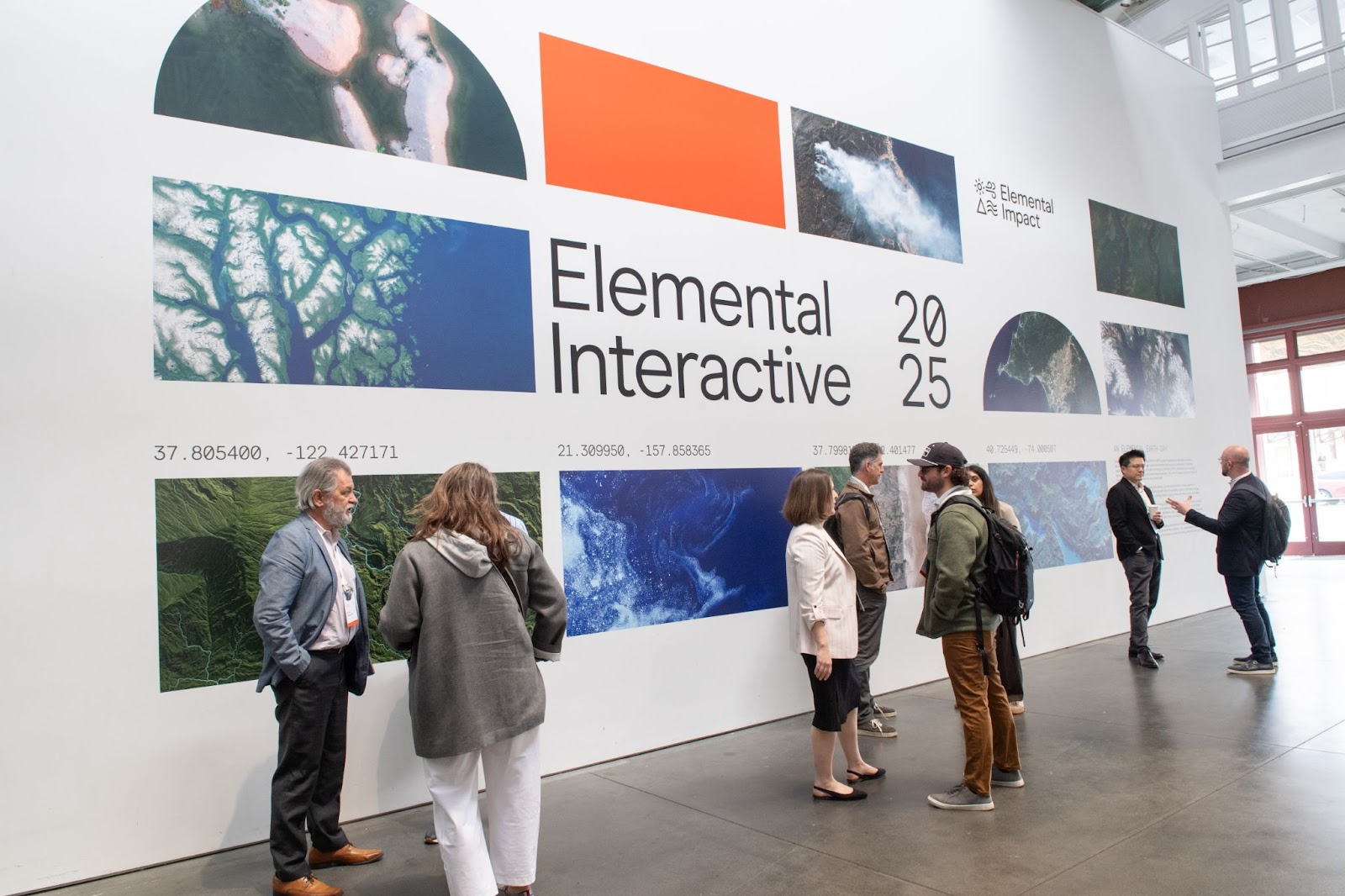
California’s brand of techno-optimism was out in full force last week at San Francisco Climate Week, where the mood stayed sunny, even when the forecast didn’t. The city’s third annual gathering pulled in the usual suspects across tech, startups, investors, and government, but this time with a distinctly local flavor. Big names like Al Gore, Nancy Pelosi, and the Mayor of San Francisco helped kick off the week.
Thousands of attendees braved the city’s hills, bouncing between events in swanky tech offices, happy hours at local breweries (shout out Zeitgeist), and beach cleanups along the coast. Like California itself, it felt more casual and distributed than CERAWeek’s hotel ballrooms or New York Climate Week’s suited-up skyscraper affairs. It was more puffers and sneakers than suits and heels, like NYCW’s little techie cousin.
The crowd this year was notably tighter and more core: fewer tourists, fewer generalists, and fewer “new to climate” faces than in years past. Familiar faces were everywhere, and the first question on everyone’s lips was simply, “How are you?” — partly because it felt like a reunion, and partly because the undercurrent of uncertainty was hard to ignore. Mentions of fundraising challenges and murmurs about which parts of the IRA might be on the chopping block crept into nearly every discussion.
Compared to last year, the energy had shifted: fewer flashy announcements, more brass-tacks problem-solving. Meanwhile, the climate tech narrative has expanded to a wider tent — it’s not just about climate anymore, but broadly bringing in key themes of security, resilience, abundance, and affordability. And we were on the ground, as usual. Here are the big takeaways.
.

- Data centers, AI, and power were everywhere.
It was a running joke that two-thirds of the events covered at least one — if not all three — of these themes. In the city where big tech was born, the energy demand conversation is starting to drown out everything else. Plus, the event, put on by Climatebase and sponsored by main California utility PG&E, brought a strong power perspective.
Conversations centered around how to meet power demand from hyperscalers, while still acknowledging that these projections are variable and subject to change. But all agreed that a scale out was needed. SoftBank Energy talked about the challenges of colocating renewables at data centers; PG&E warned that "we need 4–5x the renewable megawatts" to power them 24/7. ERCOT flagged a trend of data centers bringing their own energy supply entirely.
- Meanwhile, the grid itself stole the show.
But outsized data center energy demand brings real grid concerns — namely reliability under pressure. Machine learning loads are causing spikes in peak usage that ripple down to transformers, substations, and utilities.
PG&E and the California Energy Commission pointed to transmission bottlenecks, 7–10 year interconnection queues, and aging infrastructure as key barriers. "Timelines have been accelerated," said PG&E, but not fast enough to meet AI's appetite.
And it's not just about adding capacity anymore — it's about being proactive about security and resilience. Grid optimization innovations also featured heavily, including using AI as a tool for managing complex demand patterns and securing the grid. Tapestry, Google's AI-powered grid modeling platform, which aims to automate power flow modeling and enhance regional planning, had multiple announcements, including a newly announced partnership with PJM to apply AI in generation interconnection and regional transmission planning.
- Adaptation and resilience were in every conversation — not just on panels.
It’s California, so a major focus was natural disaster adaptation, especially in the wake of January’s devastating fires. Wildfire risk, water scarcity, and the rise of "veg tech" came up across sessions, with California utilities in particular spotlighting the shift. Adaptation is moving from a nice-to-have to a must-have, and it's no longer just about monitoring climate risk. Wildfire-related expenses are now one of the biggest drivers of utility costs (and thus, rising electricity bills).
The conversation is evolving toward proactive prevention, with solutions like controlled burns and fuel treatment gaining more traction. PG&E piloted a trial with Burnbot, for example, which uses autonomous zamboni-sized machines to undertake prescribed burns in key areas with wildfire risk.

- Investor sentiment was more downbeat than past years.
The mood among investors had noticeably shifted from last year: The first question at every meeting wasn’t “What are you working on?” but rather “How are you doing?”
There was markedly less talk this year about being "open for business." Instead, mixed sentiment rippled through conversations. Some investors were choosing to wait it out, while others were hunting selectively for opportunities. Many VCs and GPs reported pencils down — even in the final stages of fundraising — with several revising targets and timelines as 2021 vintages continue to struggle to show DPI. Given the backdrop that public equity market performance has been contributing to an LP liquidity crunch, many attendees came not just to scout deals, but to get a read on what others were thinking and doing, and to take comfort in knowing they weren’t facing these headwinds alone.
- But a broad focus on fundamentals over flash.
The "green premium" is long dead, and nervousness is rising around portfolio companies' ability to bridge missing government and VCM handouts. Investors are shifting hard toward fundamentals: cash-flowing projects, strong unit economics, and durable demand. "It’s less about funding your way to growth, more about driving revenue today," one VC said, pointing to opportunities in more near term profitable cash flow types of profiles in software and services and certain projects.
AI efficiency is even giving some early-stage teams with lower valuations an edge in fundraising, as investors see it as allowing companies to deploy faster with leaner ops. As one investor put it, volatility is now a friend — and diamonds in the rough will stand out.
Big names with big rounds were hot gossip. We heard wonders about how Base, Crux, and Mainspring pulled off huge generalist rounds while the broader market stays frozen.
Growth and PE funds also turning to more near term profitable cash flow types of profiles in software and services, silver linings is there are still good unit economic positive opportunities in projects and companies. Some examples of cement FOAK projects that had strong positive economics
- "Climate tech" isn’t the headline anymore.
Throughout the week, we noticed founders and investors reframing. Instead of leading with "climate," the conversation leaned toward supply chain security and resilience, efficiency, manufacturing, and energy abundance — narratives better aligned with industrial growth and national priorities.

- The FOAK scale gap continues.
Risk capital for first-of-a-kind (FOAK) projects continues to thin out, creating mounting challenges for companies trying to scale. With public funding — especially from the Department of Energy — slowing, stuck, or facing new hurdles, private capital alone is struggling to fill the gap. As one investor put it, “With public capital drying up, it’s going to be much harder to crowd in private markets.” There was broad consensus that this emerging funding bottleneck represents a new, and widening, version of the climate capital stack’s "missing middle."
Despite plenty of conversations and event programming focused on FOAK catalytic capital, the overall sentiment is shifting toward a more sobering reality. Without a robust public funding option to anchor deals, it's becoming increasingly difficult to pull private investors off the sidelines. As the availability of government dollars shrinks, so too does the ability to bridge the risky leap from demonstration to deployment, making it even harder to catalyze the scale-up of critical new technologies (at least in the US).
- Some investors are eyeing Europe and the Middle East instead.
Given this US policy uncertainty, especially on tariffs and tax credits, several funds said they are starting to diversify beyond the US. "We’re starting to diversify away from just US exposure," was a recurring refrain across conversations.
Beyond portfolio shifts, there’s broader strategic recalibration underway. GPs are increasingly looking to raise capital from European LPs, while companies are actively exploring how to navigate public funding opportunities and industrial policy under Europe’s new "Clean Industrial Deal," which is being framed as an IRA 2.0. Founders and investors alike are raising fresh questions about whether the first-of-a-kind (FOAK) projects and new facilities they’re planning would be better off built outside the US, where subsidies and policy certainty may be more favorable.
- Tariff fears are getting real for batteries and solar.
"WhataboutChina" — the question of mineral dependency and supply chain risk — kept coming up, especially for battery companies. US mineral refinement is far from onshored, and looming tariffs could hurt solar and storage growth just when it's needed most. With the cost of solar, wind, and batteries having fallen 70–80% over the past decade, while fossil fuel prices have stayed flat, investors spoke about the importance of maintaining momentum.
Conversations centered about the irrationality of these blanket tariffs, but the need to prepare and adapt. The broader takeaway for founders? Insulate your business models. If possible, focus on demand-side solutions (heat pumps, BTM storage) where local policy can be a tailwind. But overall, make unit economics work without depending on subsidies.
- Nuclear, the comeback kid
Several speakers doubled down on nuclear, not just R&D but deployment. As one nuclear company said, "The US has the best nuclear capabilities in the world — what we don't have is a deployment arm."
There was lots of optimism about nuclear meeting the coming surge in energy demand — especially from AI clusters and data centers — specifically around advanced nuclear like small modular reactors (SMRs). But the focus was on how to deploy them, given their longer timelines.


.jpg)

.jpg)
.png)
.png)
.png)


